
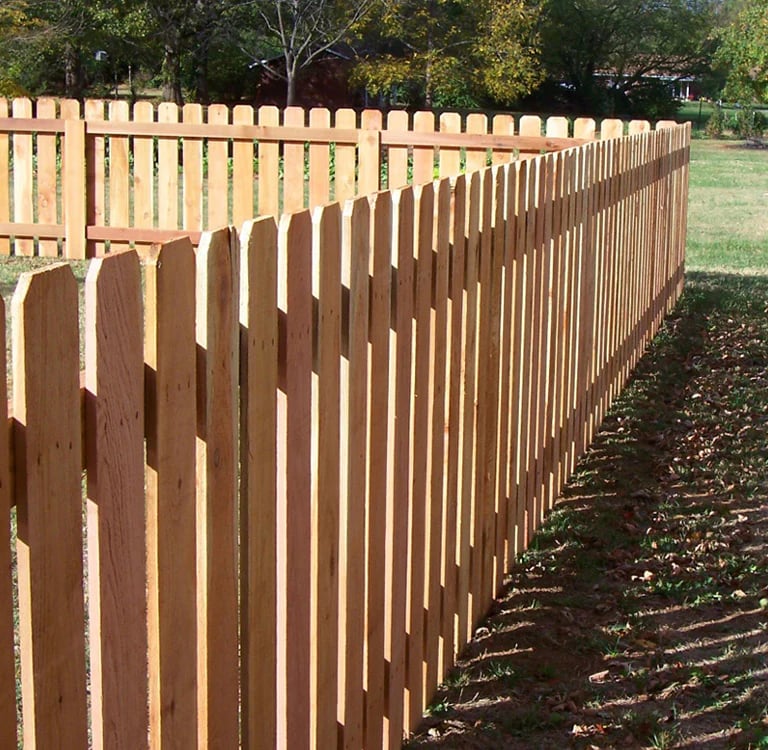
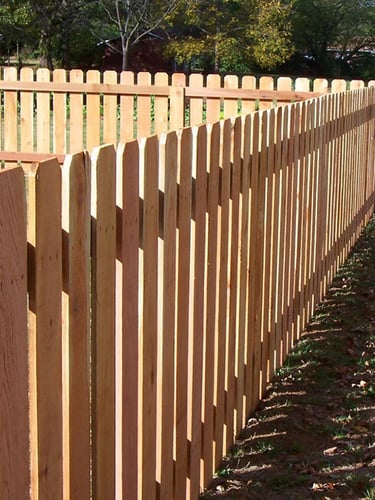
Traditional Wood Picket Fences, Middletown DE
Premium pressure-treated southern yellow pine and cedar custom-built on-site to match New Castle County slopes and local HOA guidelines. Our wood picket fences are popular for the traditional fence option in the Bear and Townsend area.
Wood Fences
Wood fencing has defined residential property lines in Delaware for generations, and it still does things that vinyl and aluminum simply can't — it takes stain the way nothing else does, it weathers to a natural silver-gray that genuinely suits older colonial and craftsman homes, and it gives a backyard the warmth and character that manufactured materials struggle to replicate. If you want a fence that looks like it belongs in New Castle County's established neighborhoods rather than one that was installed last Tuesday, wood is your material.
We install cedar and pressure-treated pine throughout Middletown, Newark, Bear, and Townsend. Every wood fence we build uses pressure-treated posts rated for ground contact, regardless of what species the pickets are — that's a detail that separates a fence that's structurally sound in year ten from one that's leaning by year four.
Cedar vs. Pressure-Treated Pine — Making the Right Call
This is the question we get most often on wood fence estimates, and the honest answer depends on your priorities.
Cedar is the premium choice. It contains natural oils that resist rot and insect damage without chemical treatment, which makes it the preferred material for homeowners who want a fence that holds up for 20+ years with proper maintenance. Cedar takes stain beautifully and evenly. It's lighter than pressure-treated pine, which puts less stress on posts and hardware over time. The downside is cost — cedar runs higher per linear foot than pressure-treated pine, and the difference is meaningful on a full-perimeter fence job.
Pressure-treated pine is our most popular wood option by volume, and for good reason. Modern pressure treatment uses copper-based preservatives that provide excellent rot and insect resistance — the old concerns about arsenic-based treatments are not applicable to lumber produced after 2004. A properly sealed pressure-treated pine fence in Delaware will realistically last 15 years with basic maintenance. It costs less upfront, and for homeowners who plan to resell or who want a durable fence without the premium cedar price point, it's the right call.
We stock graded, kiln-dried lumber from both species. We don't use green lumber — wood that's been freshly cut and still holds moisture — because it warps and twists as it dries out post-installation.
Stain and Seal — Why It Matters in Delaware
Delaware's humidity is the biggest threat to a wood fence. Average summer humidity regularly exceeds 80%, and that moisture works its way into unprotected wood through every exposed grain and end-cut. Once moisture gets in and can't get out, rot follows. It's not a matter of if — it's a matter of when.
A penetrating oil-based stain applied at installation, before the wood has any chance to weather, is the single most effective thing you can do to extend the life of a wood fence in this climate. The penetration depth is highest on fresh wood — once the surface begins to weather, it becomes less absorptive and the stain sits more on the surface than inside the grain.
We offer first-coat stain and seal at the time of installation. Available tones: natural cedar, redwood, driftwood gray, dark walnut, and clear (natural). We recommend reapplication every 2–3 years for pressure-treated pine and every 3–4 years for cedar.
Wood Fence Styles We Install
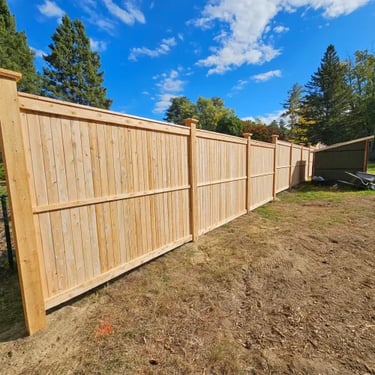
Dog-ear privacy: 6-foot solid privacy fence with diagonal-cut picket tops. The most common privacy fence style in Delaware residential neighborhoods.
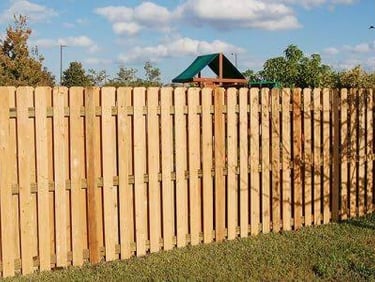
Shadowbox: Alternating pickets on each side of the rail. Looks identical from both sides — important when your fence line borders a neighbor's yard.
Board-on-board: Similar to shadowbox but with more picket overlap, creating a denser visual barrier with slight airflow.
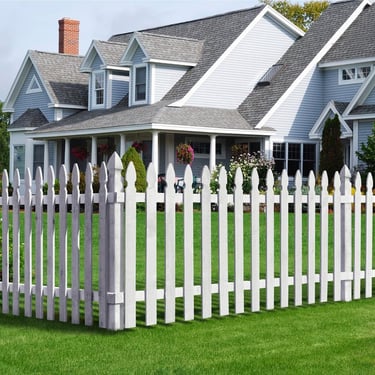
Traditional picket: 3-foot or 4-foot open picket fence for front yards, garden borders, and properties where a decorative boundary is the goal rather than full privacy.
Split rail: Two- or three-rail horizontal fence with no pickets. Common for large lot perimeters, rural properties, and as a decorative boundary that defines space without blocking views.
The Installation Process
Wood fence installation begins with a property line walk and a layout of post locations. We set posts first — pressure-treated 4x4 or 4x6 depending on fence height — in concrete at minimum 36-inch depth. Corner posts and gate posts go deeper. We allow full concrete cure before attaching rails.
Rails run horizontally between posts and carry the weight of the pickets. We use 2x4 pressure-treated rails regardless of picket species. Pickets are attached with galvanized or stainless fasteners — regular steel screws rust and leave stain marks down the face of the fence within a single season.
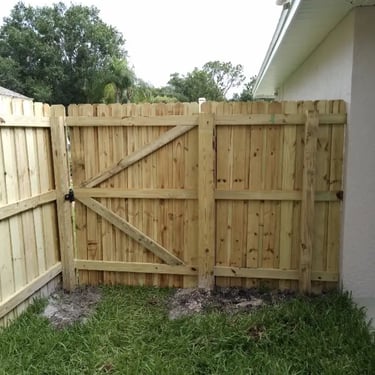
Gates on wood fences are the first thing that fails when a fence is built incorrectly — they rack out of square as the wood moves seasonally. We build gate frames with a diagonal brace running from the bottom hinge corner to the top latch corner, which prevents the sagging that causes wood gates to drag. Heavy-duty adjustable hinges allow ongoing tuning as the wood settles.
Frequently Asked Questions — Wood Fencing
How long does a wood fence last in Delaware? A cedar fence properly sealed and maintained will last 20–25 years. Pressure-treated pine, properly sealed, will realistically last 12–18 years depending on maintenance frequency. Both figures assume proper post installation in concrete — shallow-set posts are the most common cause of premature wood fence failure.
Does a wood fence add value to my home? Yes, particularly in neighborhoods where wood fencing is the aesthetic norm. A well-maintained cedar privacy fence in a Middletown or Newark residential neighborhood is consistently viewed as a desirable feature by buyers.
Can I paint my wood fence instead of staining it? You can, but we don't recommend it. Paint sits on the surface of the wood rather than penetrating it, which means it eventually peels as the wood expands and contracts seasonally. A peeling painted fence requires full stripping before repainting. Stain wears more gracefully and is far easier to maintain.
How soon after installation can I stain the fence? With kiln-dried lumber — which is what we use — stain can be applied immediately at installation. If you're purchasing pre-stain application as an add-on, we apply it the same day the installation is complete.
Do wood fences require HOA approval? In most New Castle County HOA communities, yes. Wood fences are subject to the same height, placement, and style restrictions as vinyl and aluminum. Some HOAs prefer vinyl over wood due to the lower long-term maintenance expectation. We identify your HOA requirements at the estimate stage.
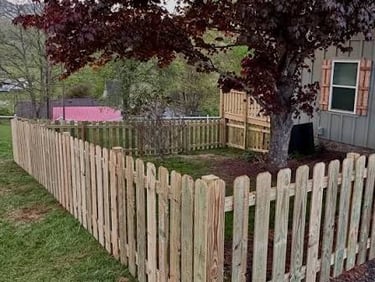
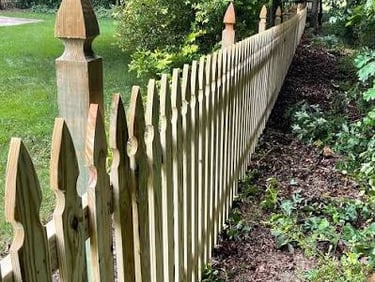
Custom Yard Installation
We do not use pre-assembled panels. Every post, rail, and picket is installed individually to handle slopes and guarantee structural integrity.
Dog-Ear Privacy
Gothic Picket
Shadowbox Privacy
Premium pressure-treated yellow pine boards overlap to block heavy Delaware winds while providing maximum backyard security and privacy. A traditional, simple design that is visually appealing as well.
Classic pointed gothic pickets spaced to define your property line while maintaining an open, welcoming neighborhood aesthetic. Our gothic picket fence is a popular choice in the Middletown area.
Alternating pickets that allow wind to flow through easily while still maintaining complete backyard privacy and structural depth. The go-to option for keeping a traditional wood look, but also maintaining privacy.
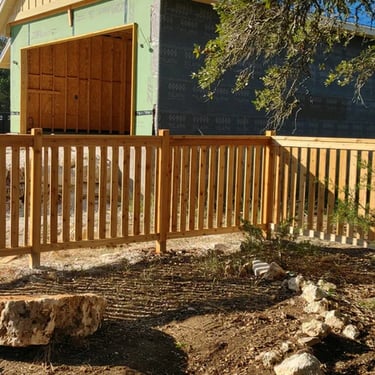
New Castle County Installations
Explore our recent custom-built wood fences across New Castle County, showing true material colors and pristine alignments. Serving neighborhoods from Middletown Highschool, all the way up to homes around Concord High School.
Free In-Yard Estimate
Get guaranteed material rates and HOA-compliant layout planning. Our local team will measure your yard and provide an upfront quote.